

Early in the morning on May 20, 2018 after 33 days at sea, Adamek and her crew made landfall in Taiohae on the island of Nuku Hiva. This is located in French Polynesia, more specifically the Marquesas island group.
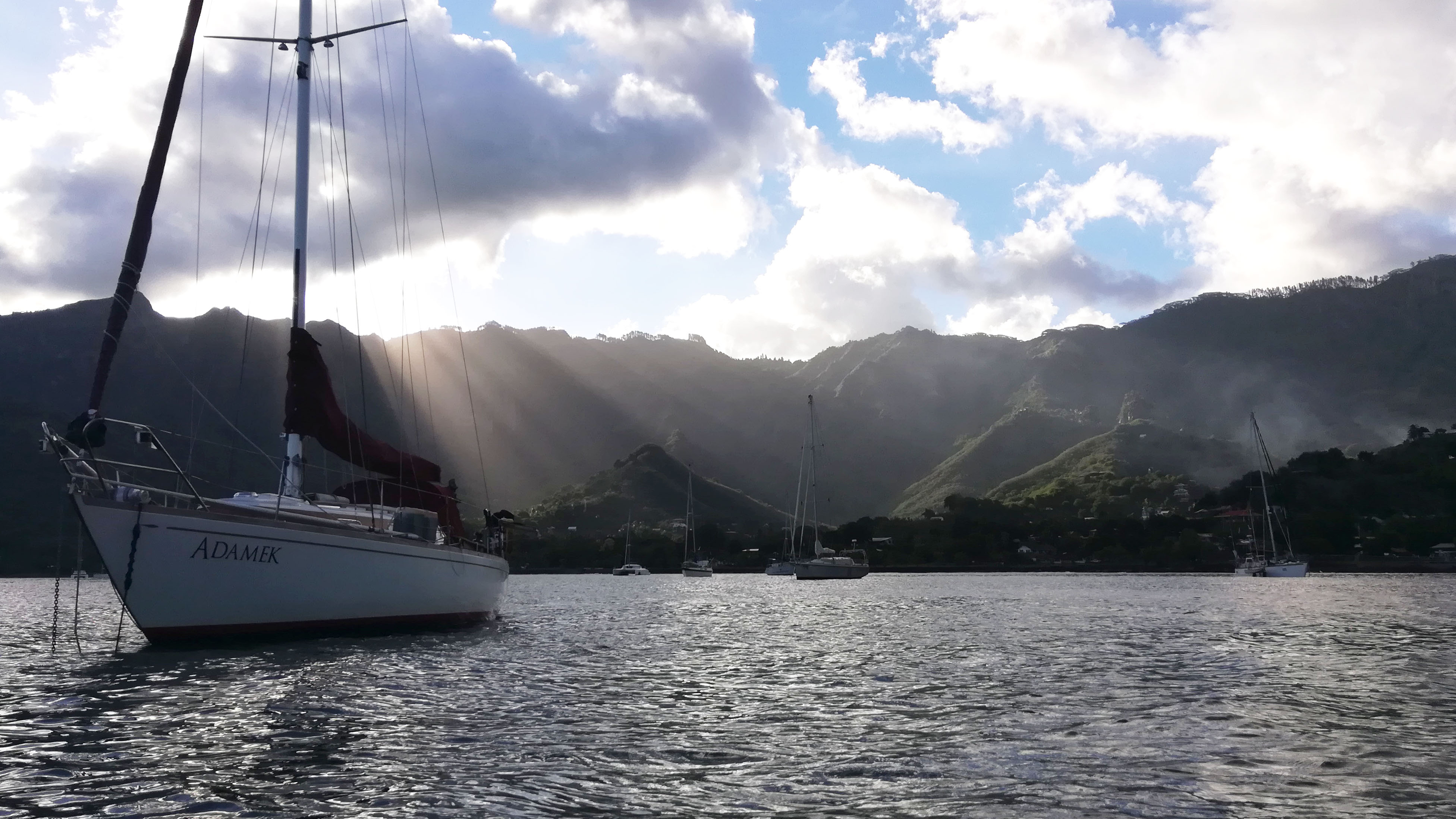
It would be difficult to overstate the feeling of accomplishment from making this particular landfall. It was by far the furthest distance and greatest test of my sailing abilities (and that of the crew).
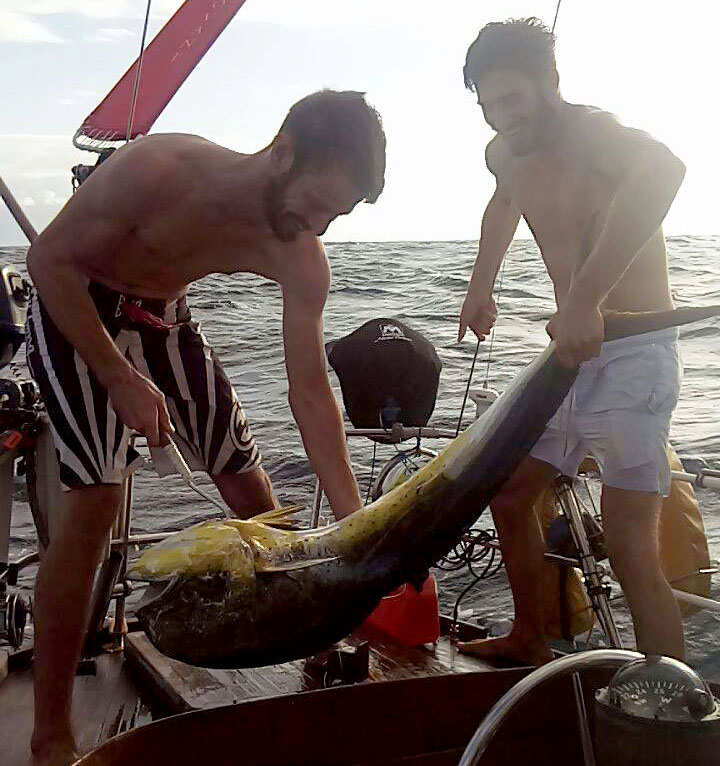
Conditions during the crossing were pretty great actually, aside from our time through the ITCZ which was a bit frustrating. As expected, there were days of light winds, no winds, shifting winds and the rest of it. Moreover there were days with very little sunlight, rendering our solar unable to keep up.
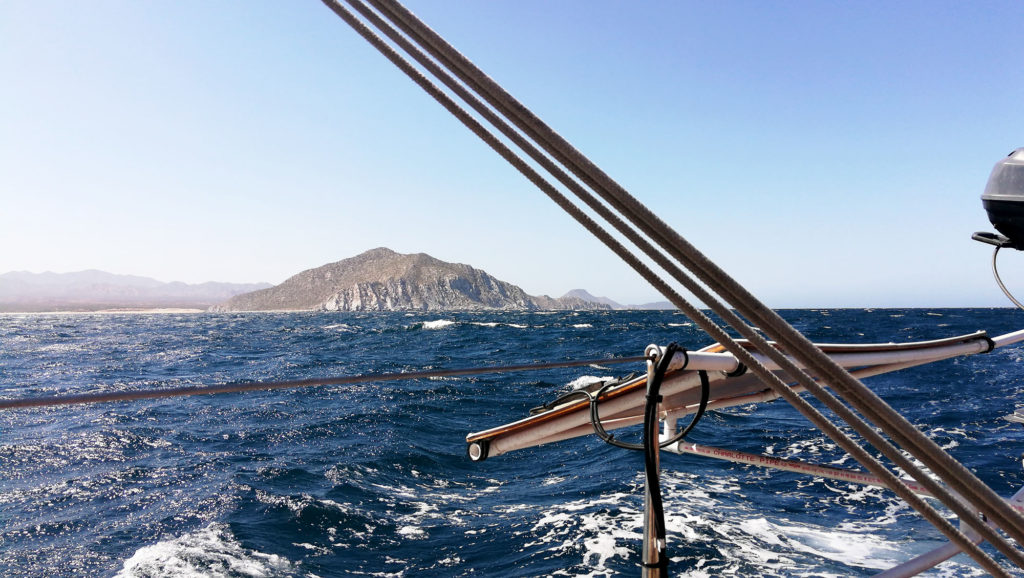
The house batteries became problematic during this time so we had to run the engine on two occasions (or was it three?) to charge. All in we probably motored for about 5 hours during the entirety of the crossing, primarily for charging but having some actual propulsion on windless days was welcome.
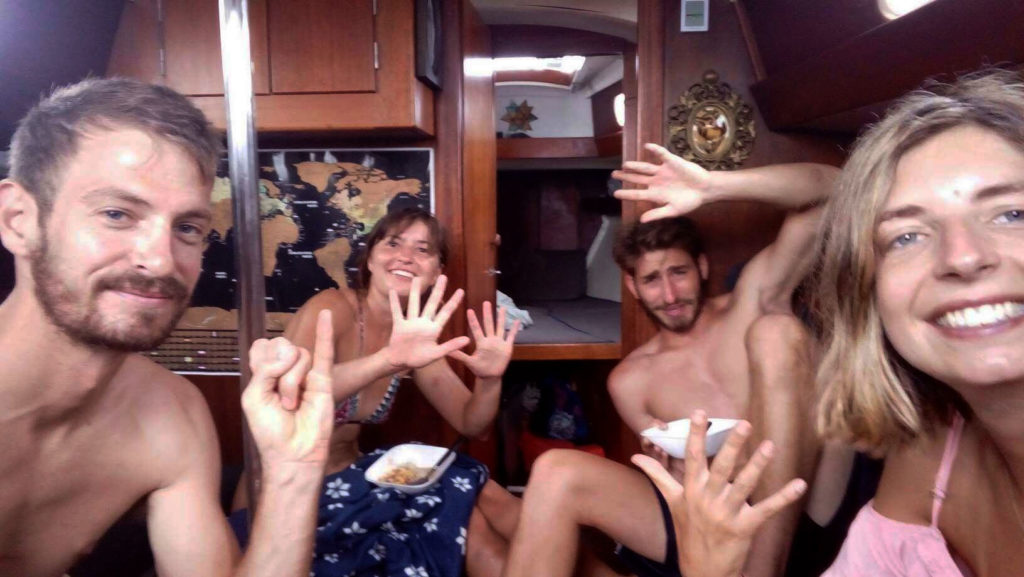
Ben, Alexandra and Cori were exceptional crew members. Along with fulfilling all of their roles, they never complained in spite of some extremely uncomfortable days/nights heeled over with limited space. They also supported me in spite of my deteriorating demeanor that was onset by factors out of their control.
You see, partway through the crossing I was given some grim news about my mom and sister back home. My mom’s health had continued to deteriorate due to complications onset by diabetes, and during the course of caring for my mom, my sister ultimately had somewhat of an episode herself which saw her hospitalized. Consequently [and understandably] my sister was unable to return to duty assisting my mom, who was now going to be left at home alone.
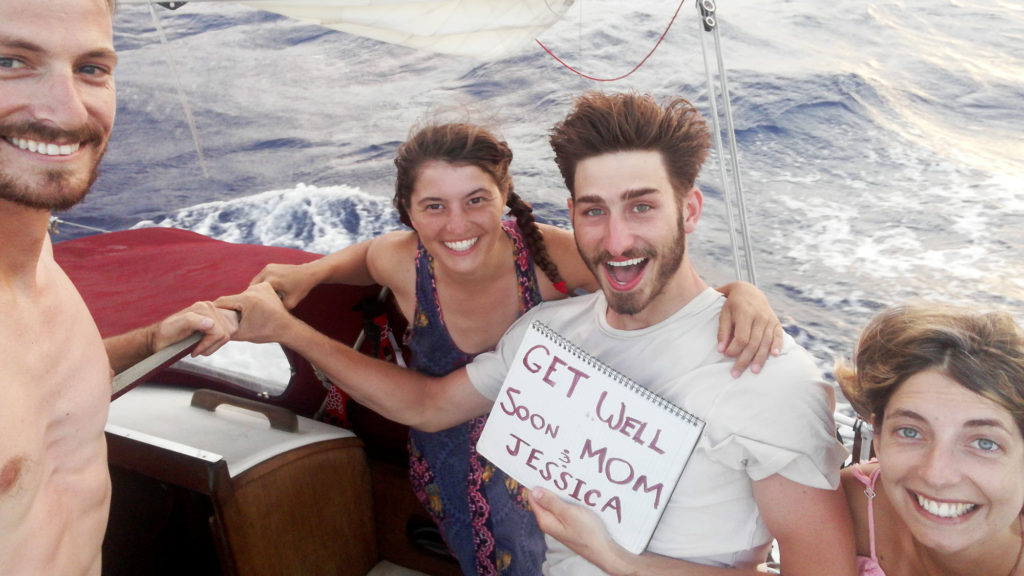
Because of this, I made the decision to put the boat into storage in French Polynesia and fly back for an undefined amount of time. It’s also for this reason that I’m writing this post months later from southern California!
Naturally, after making the journey I wanted to have some time to see the islands before flying back home. With this in mind, I decided to postpone the flight until mid to late June (approximately one month), during which time we’d see some of the more popular anchorages and scope out a place to store the boat.
Taiohae
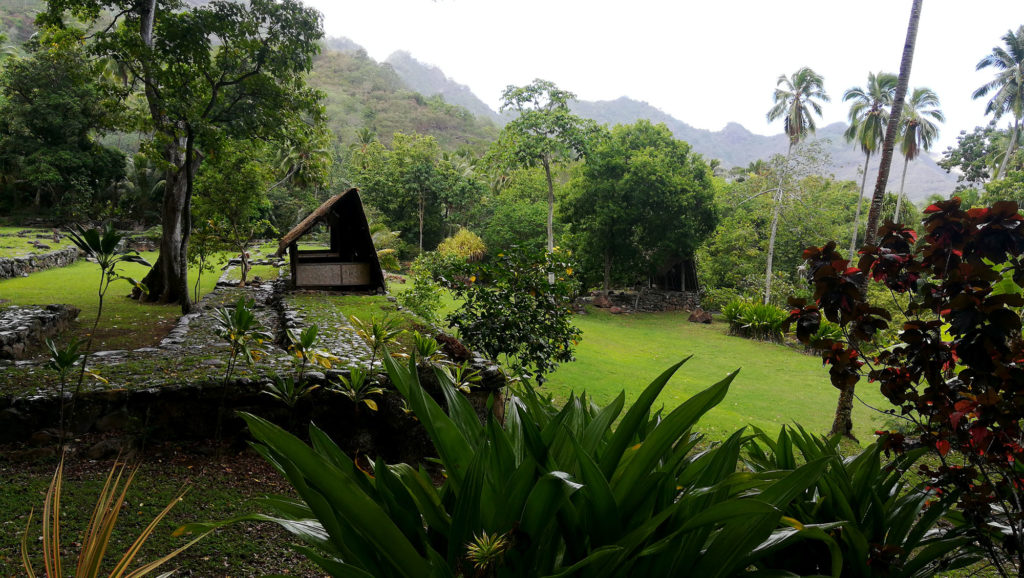
Taiohae is the most populous town on Nuku Hiva, the capital of the Marquesas and probably the most popular anchorage for making landfall. It seems that Nuku Hiva is generally preferred over Hiva Oa among sailors.
While here we made some good friends among the other cruisers. Guy and Melissa Stevens aboard Aiki (see Real World Cruising) were immensely helpful and hospitable to us. Following my departure back home, Ben and Cori actually ended up crewing a bit with them.
Speaking of Aiki crew – one of them was another new friend named Cormac. He went on a hike with Ben and Cori that almost turned deadly when, while climbing a local mountaintop, his handhold gave way and he fell backwards off a fairly sizable cliff. Miraculously he was able to twist his body positioning mid-air in such a way that his wrist took the brunt of the fall.
I had stayed back from the hike in order to work on my laptop when just after sunset emergency crews started zipping through the city. After word got to us that one of the white guys climbing the mountain had fallen, the concern became palpable. It took locals hours to get him down from the mountain, forming trains of volunteers across which his stretcher was passed. The terrain was by all accounts treacherous.
In the end he was battered and bruised but no serious injuries on him aside from a broken wrist. Within days he was on a flight home to San Francisco for recovery. He was extraordinarily lucky that day, throughout his hospitalization the locals were telling tales of all the tourist and local deaths/disappearances occurring at that same pass.
Anahō
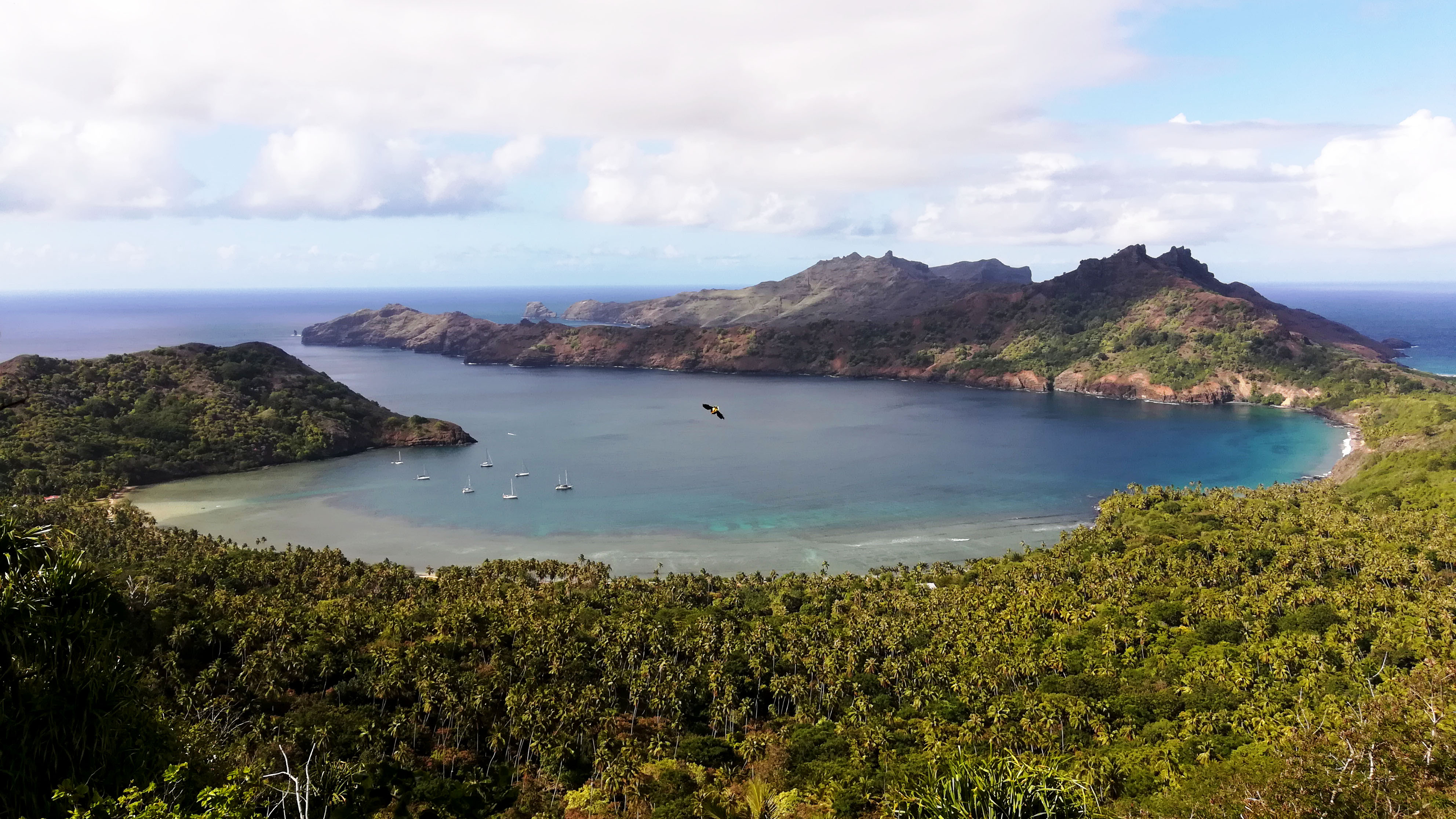
After leaving Taiohae we decided to hit up Anaho, a pristine and extremely well protected bay just around the corner. In and around the bay we found excellent snorkeling, hiking and even a little restaurant (term used loosely). It was probably the most tranquil bay that we visited, due in large part to it’s being so well protected from the weather.
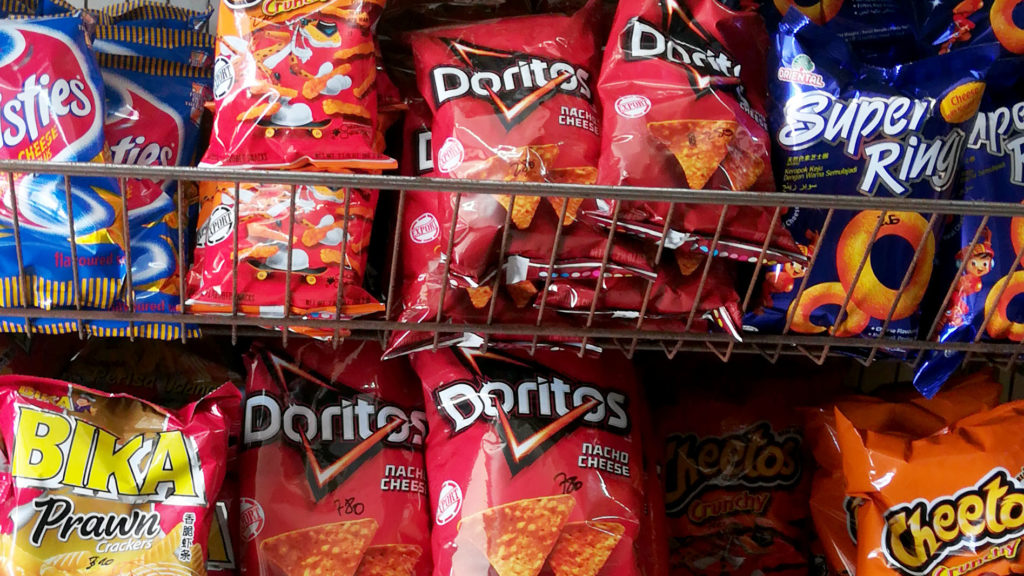
One downside of French Polynesia – prices. A dollar is approximately equivalent to a hundred FP Francs. When it comes to subsidized products like bread, cheese and rice – prices are dirt cheap. When it comes to non-subsidized prices such as the imported products, prices are slightly outrageous.
Alcohol is also very expensive in FP (even with domestic brands). As an example, a six pack of local beer is around $20. I’m told the reason for these prices is a concerted effort by the French government to avoid the locals becoming habitual drinkers. Many of the locals do not work (or work very little) and live primarily from the land and subsidies provided by France.
On the other hand, the land here is lush with wild grown fruits. Walk a mile and you’re bound to come across coconuts, mangos, star fruit, bananas and bread fruit – all free for the picking and enjoying. The fish on the other hand are a bit dangerous. Many of them eat the coral – and those that don’t often eat the fish which eat the coral. The result of this is a nasty illness called Ciguatera, caused by the flesh being contaminated with certain toxins.
As tempting as it was to extend our stay in such a calm environment, we ultimately were forced (as always) to pull up the anchor and go forth to our next destination. It was at this time that we would part ways with Alex, who jumped ship as she needed to arrive in Tahiti as soon as possible. So we bid her farewell and off she went into the sunset, bound for the Society Island group.
Next stop for us, Vaipae on Ua Huku!
The Author



No Comment